
Building Secure ECG Data Storage and Real-time Alerting System
LifeSignals Inc.: Building Secure ECG Data Storage and Real-time Alerting System
This case study focuses on Triophore’s development of a critical backend service for LifeSignals Inc.: a robust system for secure ECG data storage and real-time alerting. This solution addresses the complex challenges of managing high volumes of sensitive medical data while ensuring timely communication of critical patient events to medical professionals.
The Challenge: Secure Storage and Intelligent Alerting for High-Volume ECG Data
LifeSignals Inc.’s ECG processing system generates large volumes of data. This presents a multifaceted challenge, particularly in the highly regulated healthcare sector:
Massive Data Volume: Continuous ECG monitoring produces a steady stream of data. Storing this volume efficiently and cost-effectively, while maintaining quick access for analysis, is a significant technical hurdle.
HIPAA Compliance for Data Encryption: Patient health information (PHI), including ECG data, is protected under stringent regulations like the Health Insurance Portability and Accountability Act (HIPAA) in the United States. This mandates that data must be stored with encryption both in transit and at rest, along with strict access controls and audit trails, to ensure patient privacy and data security. Non-compliance can lead to severe penalties.
Real-time Alert Generation: Beyond storage, the system needed to perform intelligent analysis of the data to generate alerts. This implies real-time processing capabilities to identify anomalous or critical readings from the ECG and other vital signs.
Broadcast Alerts to Doctors based on Thresholds: The generated alerts needed to be disseminated promptly and reliably to relevant medical professionals (doctors). Crucially, these alerts should be based on customizable thresholds set by the doctor, allowing for personalized care plans and preventing alert fatigue from non-critical events. This requires a flexible and configurable alerting mechanism.
Reliable Notification Delivery: The system needed mechanisms to ensure that critical alerts actually reach the intended doctors, possibly through multiple communication channels, even in challenging network conditions.
The Solution: A Comprehensive Backend Service for Data Management and Alerting
Triophore successfully designed, developed, and delivered a sophisticated backend service that addresses these complex requirements:
Secure Data Ingestion and Storage: The backend was engineered to efficiently ingest the large volumes of ECG data. A key focus was implementing robust encryption protocols for data at rest (e.g., database encryption, file system encryption) and in transit (e.g., TLS/SSL for all communications) to ensure strict HIPAA compliance.
Scalable Database Architecture: To handle the massive data volumes, a scalable database solution was designed, capable of growing with LifeSignals’ needs while maintaining high performance for both data writing and retrieval.
Real-time Data Processing for Alerting: The service incorporated real-time analytics capabilities to continuously monitor incoming ECG data streams against predefined health metrics and thresholds.
Intelligent Alert Generation Engine: A sophisticated engine was developed to evaluate the data based on doctor-configurable thresholds. This allows medical professionals to set specific parameters (e.g., heart rate limits, arrhythmia detection patterns) that trigger alerts relevant to individual patient conditions.
Multi-Channel Alert Broadcasting: The system was designed to broadcast these critical alerts to doctors through reliable and diverse communication channels, ensuring prompt notification. This enhances the ability of doctors to intervene quickly when patient vitals deviate from safe levels.
Ongoing Maintenance and Support: Triophore’s commitment to continuous maintenance and support ensures the backend service remains secure, performs optimally, and adapts to evolving data volumes, regulatory requirements, and medical needs.
The Tech Stack: Powering Secure Storage, Real-time Processing, and Reliable Communication
The chosen technology stack reflects a blend of specialized databases for time-series data, robust backend development frameworks, high-performance messaging, and reliable communication platforms:
MongoDB: A NoSQL document database known for its flexibility and scalability. It is suitable for storing diverse patient data, including potentially metadata associated with ECG readings, patient profiles, and alert configurations. Its ability to handle large volumes of data and scale horizontally makes it a good fit for this system.
Node.js: A JavaScript runtime ideal for building scalable, high-performance backend services due to its non-blocking, event-driven architecture. It’s well-suited for handling concurrent data streams, processing alerts, and managing communication with various external services.
InfluxDB: A purpose-built time-series database. This is a crucial choice for ECG data storage because ECG readings are sequential data points over time. InfluxDB is optimized for ingesting, querying, and analyzing time-stamped data very efficiently, making it perfect for handling the large volumes of continuous ECG data. Its ability to perform fast aggregations and range queries is invaluable for historical analysis and real-time threshold monitoring.
Docker: A containerization platform that allows applications to be packaged with all their dependencies into standardized units. Docker ensures consistency across development, testing, and production environments, simplifies deployment, and enables easy scaling of the backend services (Node.js, InfluxDB, MongoDB instances) to handle fluctuating data loads.
ZeroMQ (ØMQ): A high-performance asynchronous messaging library. ZeroMQ provides sockets that can carry messages across various transports like in-process, IPC, TCP, and multicast. It can be used for highly efficient, low-latency communication between different components of the backend service, such as passing data from ingestion services to the alert processing engine, or for internal message queues.
Twilio: A leading cloud communications platform. Twilio would be used for broadcasting alerts to doctors via SMS messages and phone calls. Its robust APIs and global reach ensure reliable delivery of critical notifications, even when email or app notifications might be missed.
AWS SES (Simple Email Service): Amazon’s cloud-based email sending service. AWS SES would be used for broadcasting alerts to doctors via email. It provides a highly scalable and cost-effective way to send transactional and marketing emails, ensuring that alerts can be sent reliably to a large number of recipients.
Related Case Studies
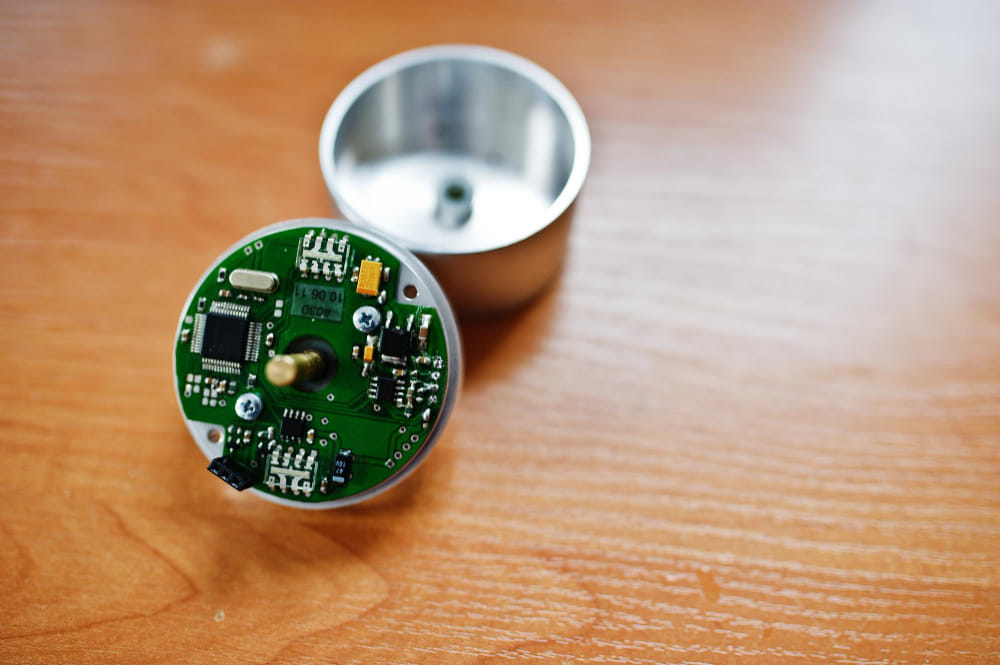
BioSensor Relay Mobile Application
In the rapidly evolving landscape of digital healthcare, remote patient monitoring (RPM) solutions are transforming how medical data is collected and analyzed. LifeSignals INC, a pioneer in wireless biosensor technology, sought to enhance the utility of their innovative Wireless ECG Patch.
Read More
Delivery Agent Mobile Application
Read MoreE Learning Platform for Compass Institute
In the rapidly evolving educational landscape, e-learning platforms have become indispensable tools for delivering flexible, accessible, and engaging learning experiences. Compass Institute, a renowned educational institution, sought to expand its reach and enhance its pedagogical methods by developing a comprehensive online learning platform. Triophore partnered with Compass Institute to design and develop a robust, user-friendly e-learning application that would cater to their diverse student body and course offerings.
Read More